Collision-Safe Digital CNC Simulation
Validate CNC toolpaths in 2D/3D environments before release, helping identify collisions, overtravel and setup risks before they reach the shop floor.
Explore the use case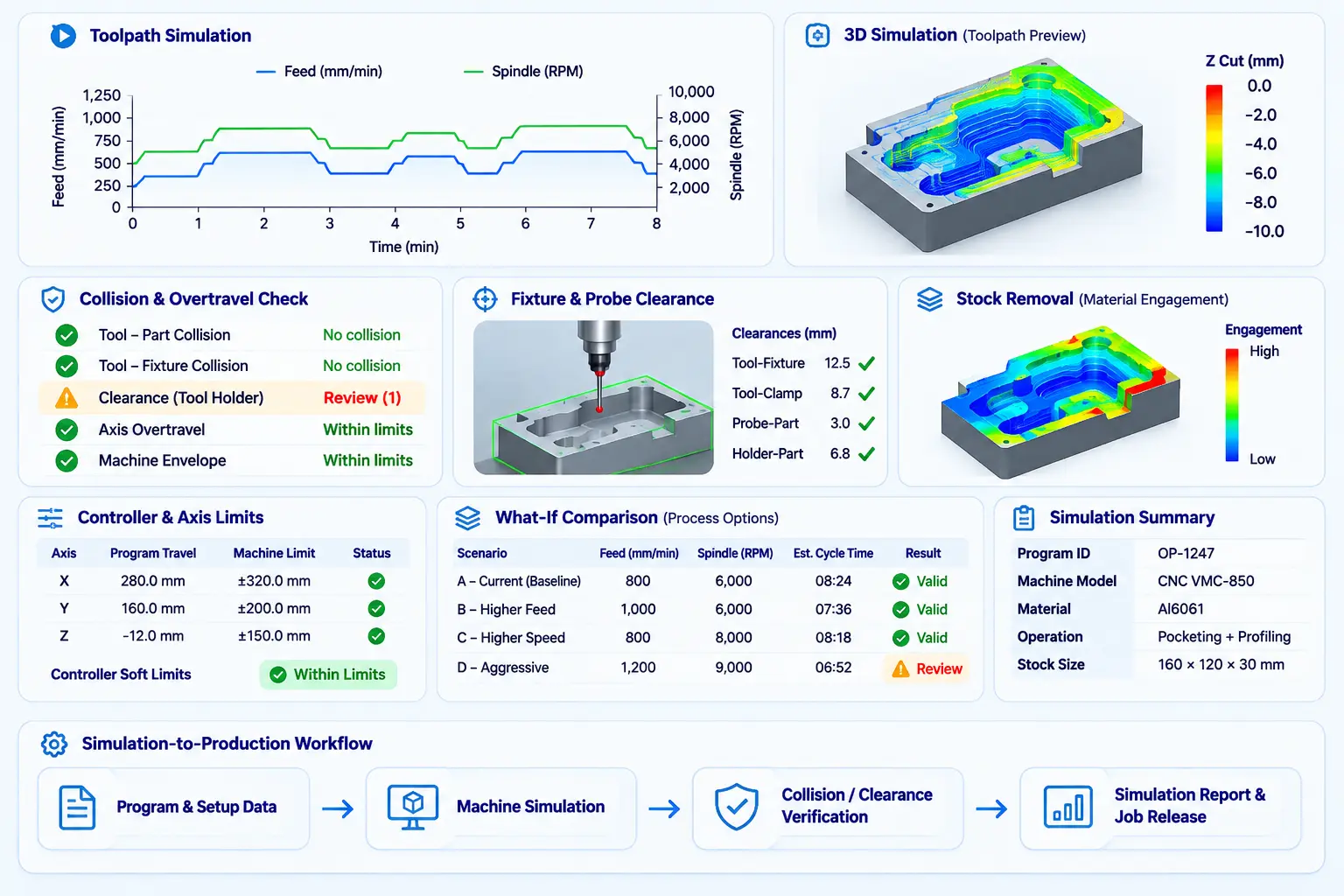
Unverified CNC toolpaths expose production to avoidable risk and disruption.
Without simulation, unexpected toolpath errors may surface only during trial runs, causing delays, rework and unnecessary waste on the shop floor.
Collision & Overtravel Risk
Unverified toolpaths can cause collisions, axis overtravel and setup surprises that disrupt schedules and damage equipment.
Wasted Trial Runs
Trial-and-error approaches consume machine hours, cutting tools and raw materials while delaying production targets.
Experience Dependency
Without virtual verification, operators must rely heavily on experience, increasing variability across jobs.
Lengthy Job Approvals
Supervisors may delay release when there is no documented evidence that a program and setup are safe.
Simulation-first verification of CNC toolpaths, machine motion and setup clearances.
A simulation-first approach virtually validates toolpaths before release, helping reduce production risk, improve accuracy and build confidence across programming and production teams.
Machine Simulator
Model machine travel limits, axis kinematics and controller-specific soft limits to identify overtravel and collision risks.
Stock Removal & Chip-Load Preview
Preview stock removal and identify excessive heat and load hotspots that may contribute to tool wear or material distortion.
Fixture & Probe Checks
Verify tool reach, probing sequences and clearances to support safe execution of machining setups.
What-If Scenarios
Compare tool choices and machining parameters to evaluate cycle times while maintaining safety margins.
From CNC program and setup data to documented simulation results.
The Machine Simulator uses program, machine and setup information to evaluate tool movement and generate reports before a job is released to production.
Input Data
G/M-code, machine kinematics, fixtures, probing sequences and stock models form the simulation baseline.
Processing Scope
Pre-release verification for high-mix, low-volume cells and prototype machining environments.
Final Output
Simulation reports with cycle-time details, flagged collisions and clearance issues, and quantified production risks.
Simulation Before Job Release
Machine motion, toolpath clearances and collision risks are evaluated before production approval.
A repeatable simulation workflow before CNC program release.
Load Program & Setup Data
Provide G/M-code, machine kinematics, fixtures, probing sequences and stock models for simulation.
Simulate & Verify
Evaluate machine motion, travel limits, stock removal, chip load, tool reach and setup clearances.
Review Simulation Report
Review cycle-time details, collision and clearance flags, and production risks before job release.
Delivered through a Machine Simulator with both cloud and on-premise rendering to support varied shop-floor requirements.
Safer releases, fewer trial iterations and greater shop-floor confidence.
Virtual verification helps reduce rework and downtime, improve machining accuracy and accelerate approval of CNC programs before production.
Reduced Manual Trial Iterations
Fewer trial-and-error cycles conserve cutting tools, raw materials and valuable machine hours.
Fewer Critical Collision Events
Virtual checks identify overtravel and collision risks before programs reach active machining cells.
Higher First-Pass Success
Pre-release verification supports more reliable first-time-right runs and greater shop-floor confidence.
Accelerated Job Approvals
Documented simulation evidence helps supervisors review and release jobs faster.
ForgeSense™
AI-powered manufacturing intelligence for CNC programming, machining workflows and shop-floor operations.
Want to verify CNC jobs before they reach the shop floor?
Explore how ForgeSense™ can help simulate toolpaths and identify machining risks before release.
Discuss this use case